Tuscan kitchen design

5 Tuscan Kitchen Design Elements
That Will Surprise You


Authentic Tuscan kitchen design - rustic Italian farmhouse kitchen
27Oct

Why Tuscan kitchen design is not what you think

Close your eyes and picture a Tuscan kitchen. For many people the image is a bright yellow wall, a border of painted grapes and a shelf of matching ceramic roosters. It is a charming picture, but it is mostly a catalog invention, and it has very little to do with how real kitchens look in the hills around Siena, Florence and Arezzo.

Authentic Tuscan kitchen design grew out of farm life. These were working rooms where bread was baked, meat was roasted over an open fire and the whole family gathered at one table. Every element had a job to do, and the beauty came as a side effect of function and age.

That is why the real thing can surprise you. In this guide you will discover five Tuscan kitchen design elements that most decor articles skip: the ceiling that steals the show, the fireplace at the heart of the room, floors that are meant to age, furniture that was never part of a set, and a color palette that is far quieter than you expect. Each one comes with ideas you can borrow for your own rustic Italian kitchen, wherever you live.


1. The ceiling is the star: exposed beams and brick vaults

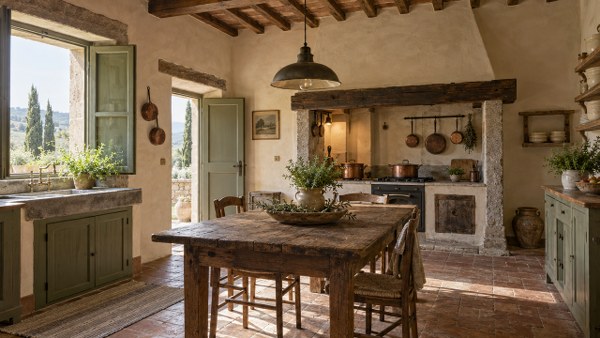
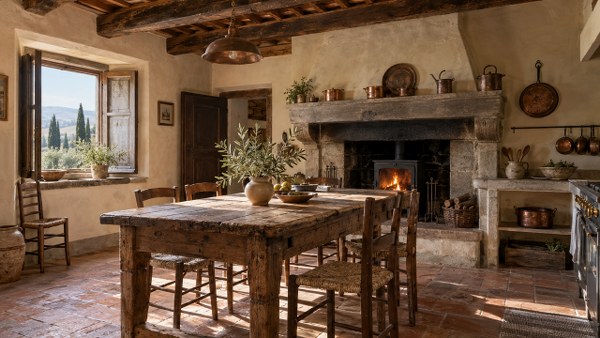
In most modern kitchens the cabinets get the attention. In a traditional Tuscan kitchen, you look up first. Exposed wooden beams (travi) cross the ceiling, often chestnut or oak, with small terracotta tiles (pianelle) or plaster set between them. In older stone houses you will also find brick vaults, either a simple barrel shape or a cross vault where two arches meet.
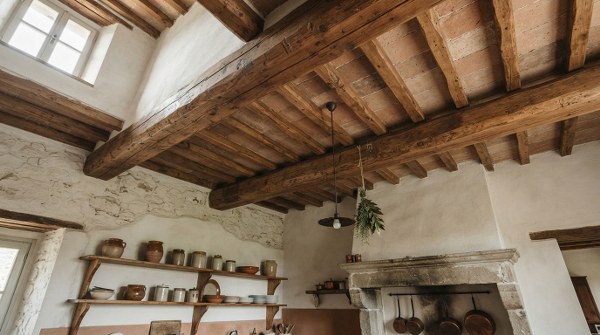
Tuscan farmhouse kitchen with exposed wooden beams

The surprise: in many farmhouses the ceiling is the oldest and most valuable part of the room, often centuries old. Nobody paints it, covers it or hides it behind a false ceiling. The dark, rough timber is the character of the kitchen.


How to borrow the idea


  • Keep beams natural, in a dark or mid-tone wood, and let the knots, cracks and axe marks show.
  • Pair them with plain whitewashed or lime-plastered walls so the wood stands out.
  • No beams in your home? Reclaimed timber beams or lightweight box beams give a similar effect.
  • Hang pots, dried herbs or a simple iron lamp from the beams, as a real kitchen would.
 

2. A working fireplace at the heart of the room

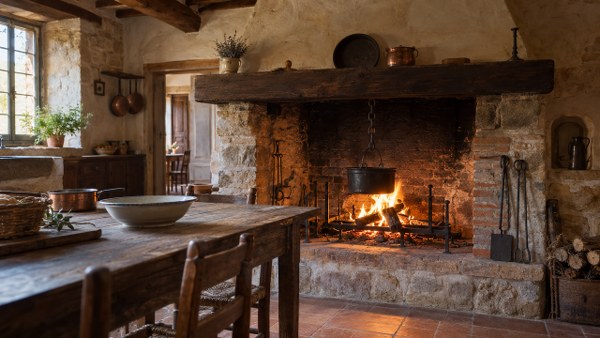
The camino, the large open fireplace, was the original center of the Tuscan kitchen. Families grilled meat and bread on it, roasted over the embers and kept the whole house warm in winter. Many are built from local stone or brick, with a deep hearth, a heavy wooden mantel and sometimes a built-in bench or a pot hook (catena) for hanging cookware.

Stone fireplace in a traditional Italian kitchen

The surprise: the room was traditionally planned around the fire, not around a stove. The table sat close to the warmth, and the layout followed the way people cooked and gathered. Today the fireplace is often the first thing guests walk toward.


How to borrow the idea


  • If you have a fireplace, treat it as the focal point and keep the surround simple: stone, brick or lime plaster.
  • Add a few real tools, such as an iron poker, a log basket and a heavy pan, instead of purely decorative objects.
  • No chimney? A cooker hood clad in plaster or stone, or a brick-style range alcove, can echo the look.
  • Place a table or comfortable bench nearby so the kitchen is a place to sit, not only to cook.


3. Terracotta floors that are meant to age

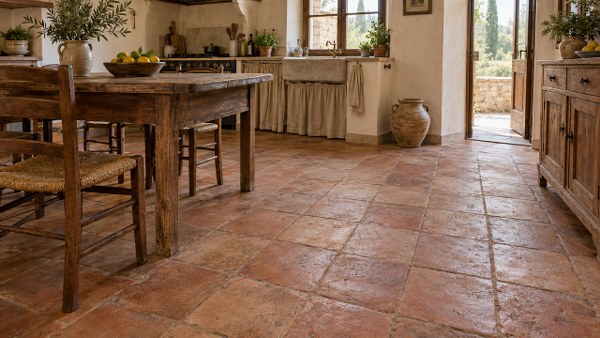
Handmade terracotta, known as cotto, is the classic floor of a Tuscan kitchen. The town of Impruneta, near Florence, is famous for it. Each tile is slightly different in color, from pale pink to deep orange-brown, and the edges are never perfectly sharp.

Handmade terracotta cotto floor tiles in a Tuscan kitchen

The surprise: cotto is porous, so it absorbs oil, wine and water, and it slowly darkens and softens with use. Tuscans do not see that as damage. The marks are the history of the house, and a well-worn floor is more admired than a flawless one. Traditionally the tiles are treated with natural oils and waxes rather than a glossy synthetic coating.


How to borrow the idea


  • Choose handmade or hand-finished terracotta over machine-perfect porcelain “terracotta look” tiles.
  • Mix tiles from several batches so the color varies naturally across the floor.
  • Ask your installer or supplier how to seal and maintain cotto, since the right treatment depends on the tile and the room.
  • Accept the patina. A few stains and scuffs are part of the look, not a mistake.


4. Furniture instead of fitted cabinets

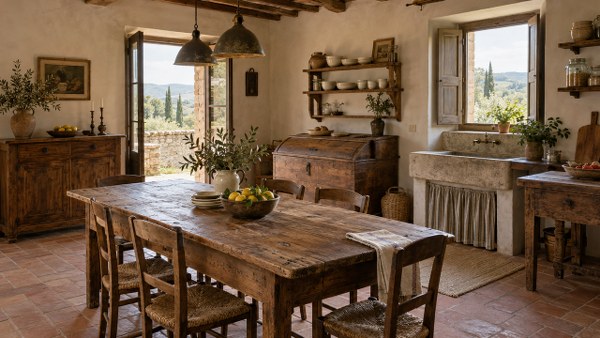
A traditional Tuscan kitchen rarely has a row of matching wall units. Instead you find separate pieces: a large wooden table scarred by generations of use, a freestanding sideboard (credenza), open shelves for plates and jars, and often a madia, the old wooden chest used for storing bread and kneading dough. The sink is frequently a deep stone basin set into a simple wooden or masonry base.

Rustic wooden table and credenza in a Tuscan farmhouse kitchen

The surprise: the matching kitchen set is a modern idea. The authentic look comes from pieces that were added, repaired and handed down over time, so no two kitchens are the same. It is a style built on collecting, not on buying everything at once.


How to borrow the idea


  • Use a solid wood table as your main work surface or island, and do not worry about dents and marks.
  • Mix furniture finishes slightly: oak, chestnut and painted pieces can sit together.
  • Replace some upper cabinets with open shelves or a plate rack for everyday dishes.
  • Look for antique and second-hand pieces at local markets before ordering new ones.


5. A color palette that is quieter than you think

Walk into a real Tuscan farmhouse kitchen and the colors are soft and earthy: limewashed white, warm cream, pale sand, stone grey and muted olive green. The strong colors come from natural materials, such as the orange-brown of terracotta, the dark of old timber, the grey of local stone and the gleam of copper pots.

Limewashed walls and copper pots in an Italian farmhouse kitchen

The surprise: the bright yellow and burnt orange walls sold as “Tuscan style” are mostly a foreign invention, inspired by sunlit landscapes rather than by actual interiors. In a real kitchen, color comes from the materials and from the food on the table, not from paint.


How to borrow the idea


  • Paint walls in lime-based or matte mineral paint in off-white, cream or sand. The slightly uneven finish adds depth.
  • Let wood, stone and terracotta provide the warm tones.
  • Add small touches of olive green, in painted shutters, a cabinet door or a few plants.
  • Finish with copper, iron and plain ceramic, and avoid shiny, matching decor.


Final thoughts: authentic Tuscan kitchen design is about honesty

The thread running through all five elements is simple: real Tuscan kitchen design values what is useful, natural and lived in. Exposed beams, a working fireplace, aging terracotta, collected furniture and a calm palette all tell the story of a room that has been used for generations.

You do not need a farmhouse to bring that spirit home. Start with one element, such as a solid wood table or a limewashed wall, and let the kitchen develop over time.

Which of these five surprised you the most? Share your thoughts in the comments, and subscribe to the blog for more stories and ideas from Tuscany.


Some links on this page are affiliate links. As an Amazon Associate I earn from qualifying purchases, at no extra cost to you. Read the full disclaimer.


FAQ About Tuscan Kitchen Design

What colors are used in a Tuscan-style kitchen?View Answer+

A real Tuscan kitchen uses soft, earthy colors: limewashed white, warm cream, pale sand, stone grey and muted olive green. The stronger colors come from natural materials rather than paint, such as the orange-brown of terracotta floors, the dark tone of old timber beams, the grey of local stone and the gleam of copper pots. The bright yellow and burnt orange walls often sold as "Tuscan style" are mostly a foreign invention.

How can I make my kitchen look Tuscan without renovating it?view answer+

Start with small changes that do not need building work. Repaint the walls in matte, lime-based or mineral paint in off-white, cream or sand. Replace a few upper cabinets with open shelves or a plate rack, add a solid wood table, and use copper, iron and plain ceramic instead of shiny matching decor. Hang pots or dried herbs, add a few olive green touches such as plants, and look for antique or second-hand pieces at local markets.

What materials are commonly used in traditional Tuscan kitchens?view answer+

Traditional Tuscan kitchens rely on natural, local materials: handmade terracotta (cotto) for floors, chestnut or oak for beams and furniture, local stone or brick for fireplaces and sinks, and lime plaster for walls. Copper, iron and plain ceramic are used for pots, hooks and tableware. These materials are valued for aging well, so scratches and darker patches are part of the look.

What is the difference between Tuscan and modern Italian kitchen design?view answer+

Tuscan kitchen design is rustic and built over time. It uses exposed beams, a fireplace, aging terracotta, separate pieces of furniture and a quiet, earthy palette. Modern Italian kitchen design is sleek and planned as a set, with fitted cabinets, smooth surfaces and a minimalist look. The Tuscan style values age and patina, while the modern style values clean lines and a flawless finish.

Can I create a Tuscan kitchen in a small apartment?view answer+

Yes. A Tuscan kitchen is about the feel of the room, not its size. In a small apartment, choose one or two elements: limewashed or cream walls, a small solid wood table, open shelves instead of upper cabinets, and a few copper pots or terracotta pieces. If you cannot add real beams, lightweight box beams or reclaimed timber can give a similar effect. Keep the palette calm and avoid too many decorative objects, so the space does not feel crowded.


Welcome! We are glad you're here!
Like our website? Give us your like!


Travel to Tuscany, Italy - Tuscany Wine Tours & Cooking Classes


Popular articles
How to Make Your House Look Like an Italian Villa (Without Moving to Italy)
Italian villa style

In this guide you will find six practical steps to make your house look like an Italian villa...

Tuscany Christmas markets & Christmas villages - Florence Siena Lucca Montepulciano Arezzo Empoli Pisa
Christmas Markets 2026 - 2027

Planning a Christmas trip to Tuscany? Discover the best Christmas markets of 2026, town by town...

What do do with figs - Fresh figs recipes
What to do with figs

Fresh fig recipes are one of the best things about late summer and early autumn in Tuscany...

Top 10 Italian Makeup Brands - Affordable Must-Haves & Luxury Beauty Picks
Italian Makeup Brands

This guide will help you navigate the top 10 Italian makeup brands, compare affordable vs luxury...

Top 10 Tuscan Leather Brands - Where to Buy Genuine Leather Made in Italy
Tuscan Leather Brands

Tuscan leather brands are famous all over the world for their quality, craftsmanship, and timeless style...

Livorno Cruise Ship Port - Day Trips & Things to Do in LIvorno for a day
Livorno Cruise Ship Port

There're many things to do in and near Livorno for cruise travellers - day trips and shore excursions...

Best Slow Food Tuscany Restaurants 2026 - Italian Restaurant Awards Winners for Authentic Tuscan Food
Slow Food Restaurants 2026

Discover Italian restaurant awards winners for authentic Tuscan food - where to eat in Tuscany...

Top Italian Makeup Stores - Where to Buy Beauty Products in Italy
Buying Beauty Products in Italy

These top Italian makeup stores are where you can buy the best beauty products in Italy, from...

Top 10 Italian Skin Care Brands - Famous Italian Skincare Manufacturers
Top 10 Italian Skin Care Brands

In this guide, I'll share with you my favourite Italian skin care brands for women and men...

Where to Shop in Italy 2026 - Clothes Shopping in Italy - Designer and Outlet Shops
Where to Shop in Italy

Many tourists planning a shopping in Italy face the same question: Where to shop in Italy?

Best Pasta Brands from Italy and Best Italian Spaghetti brands
Best Italian Pasta Brands

These top Italian pasta brands dominate both Italian supermarkets and international shelves.

Olive Harvest Season in Tuscany, Italy 2025 - Fewer Olives - Will Price of Italian Olive Oil Go Up?
Olive Harvest in Tuscany

The olive harvest in Italy and the production of Italian olive oil mark one of the country’s...

How to Order and Drink Coffee in Italy
Italian Coffee

Ordering a coffee in Italy can be an adventure. Locals follow so called “commandments”: cappuccino is...

Top Luxury Ski Resorts in Italy - Where do celebrities go in Italy?
Luxury Ski Resorts

If you're planning your skiing holidays, our map of most exclusive ski resort in Italy visited by celebrities...

What does it cost to prepare a kid for school in Italy for public & private school
Cost of School in Italy

What does it cost to prepare a kid for school in Italy for public & private - primary, middle & high school...

What does it cost to prepare a kid for school in Italy for public & private school
Cash and Carry Italy

Metro Cash and Carry Italy is one of the largest wholesale store chains in Italy for business owners and...

Where to Find Wild Mushrooms in Italy - Mushroom Foraging Map
Mushroom hunting

Our mushroom map will help you mushroom foraging & truffle hunting in Italy...

Best beaches in Tuscany, Italy
Tuscany Beaches

Tuscany coastline offers breathtaking beaches with golden sands, crystal-clear waters, and stunning...

Zoo in Tuscany Italy - Zoo near Florence Italy
Tuscany Zoos

Tuscany is home to several zoos and wildlife parks. The Pistoia Zoo, one of Italy’s largest...

Water parks and Aqua Parks in Tuscany, Italy
Skiing in Tuscany

Abetone ski resort in Tuscany, Italy is known for its stunning alpine scenery and outdoor activities...

How to Make Garlic and Rosemary Infused Olive Oil Recipe
Garlic Infused Olive Oil

Infused olive oil with garlic and rosemary is a flavorful and aromatic addition to any kitchen...

Hot Springs & Thermal baths in Tuscany, Italy
Where to Fly into for Tuscany

What is the nearest airport to Tuscany? Tuscany has several airports serving international flights...

Must Try Tuscany Wine & Tuscany Wine Tours
Best Tuscan Wines

List of must-try Tuscan wines 2025 including taste profiles, and perfect food pairings...

Where to Shop in Italy - Shopping in Tuscany
Italian Clothing Brands

Italy is not just about high-end luxury brands; it also has many affordable Italian clothing brands...

How to Make Homemade Lasagna Step by Step - Italian Lasagna Bolognese
Making Lasagna like Italians

In this lasagna Italian recipe I will show you how to make lasagna step by step, how to layer it with...

What are ZTL zones in Italy? Driving in Italy
What is ZTL in Italy?

Tourists CANNOT drive into the ZTL zones in Italy (restricted traffic zones) unless...

What are ZTL zones in Italy? Driving in Italy
Italian Pharmacy Skincare

Italian pharmacy skincare must-haves are the hidden gems of European beauty...

Luxury watches brands ranking
Italian Luxury watches

This luxury watches of Italian brands list features iconic names from Italy...

Top 10 soft & hard Italian Cheeses to eat or bring back from Italy. Wine pairing and nutrition information
Must-Try Italian Cheeses

Top 10 soft & hard Italian Cheeses to eat or bring back from Italy. Wine pairing and nutrition information...

Blue Flag Beaches of Tuscany 2025 - Where to Swim in Tuscany in 2025
Tuscany Blue Flag Beaches

In 2025, 19 Tuscany towns awarded the prestigious Blue Flag beach award for clean water...

Chicken liver pate easy recipe - How to Make Tuscan crostini from scratch
Traditional Tuscan Crostini

Tuscan chicken liver pate, known in Italy as Crostini Toscani, is a delicious traditional Italian appetizer...

You might also be interested in: