Italian villa style

How to Make Your House Look Like
an Italian Villa
(Without Moving to Italy)


How to Make Your House Look Like an Italian Villa (Without Moving to Italy)
29Oct

You do not need a hillside in Tuscany
to get the Italian villa look

Almost everyone who visits Tuscany comes home with the same quiet wish: to bring a little of that feeling back with them. The warm light on old plaster walls, the shade of a pergola, the cool terracotta underfoot. The good news is that an Italian villa style home is not about square footage or a Mediterranean climate. It is about a handful of simple choices that you can make in a house in London, Toronto, Sydney or Texas.

A real Italian villa is not a showroom. It is a house that has been lived in for generations, with natural materials, soft colors and a strong connection between inside and outside. Nothing is too perfect, and nothing is too new. That is exactly what makes the look easy to borrow: you do not need to spend a fortune, you only need to choose honest materials and let them age.

In this guide you will find six practical steps to make your house look like an Italian villa, from the wall color and the floors to the front door, the furniture and a small courtyard garden. You can do all of them, or start with just one. Each idea works for a full renovation or for a weekend project.


1. Start with warm, textured walls

The fastest way to change the mood of a house is the wall color. Italian villas rarely have flat, bright white walls. Instead you will see warm, sun-faded tones: cream, sand, soft ochre, pale terracotta and dusty yellow. The surface is just as important as the color. Traditional plaster is slightly uneven, with soft brush marks and a gentle, chalky finish.
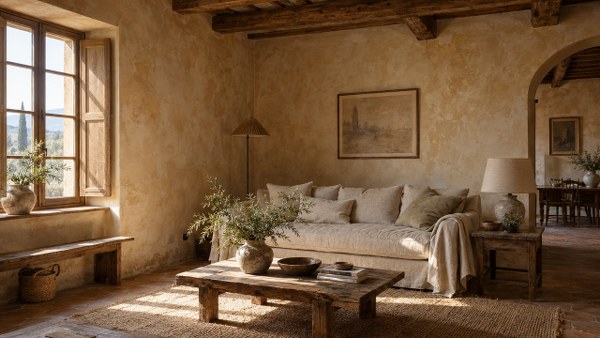
Warm textured plaster walls in an Italian villa interior

The idea: choose a muted, earthy color rather than a bright one, and give it texture. A limewash or mineral paint, or a skim of decorative plaster, gives that aged look that a smooth, glossy paint cannot.


How to do it


  • Pick two or three warm neutrals and use them throughout the house, so the rooms feel connected.
  • Try limewash or a mineral paint, and apply it with a wide brush in crossing strokes for a soft, cloudy effect.
  • Test a large sample on the wall and look at it in morning and evening light before you commit.
  • Keep ceilings and trim in a softer shade, such as warm white, instead of stark white.
 

2. Use natural materials: terracotta, stone and wood

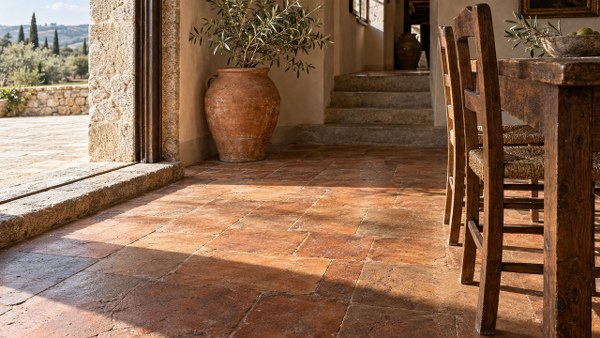
Look at any Italian villa and you will notice the materials before the decor. Terracotta floors, stone steps and windowsills, chestnut or oak beams, iron hardware and clay roof tiles. These are the elements that give the house its weight and its calm character.

Terracotta floor and stone details in an Italian villa

The idea: you do not have to replace every floor. Even one or two natural materials, used in the right places, will make a house feel more Italian than a dozen decorative objects.


How to do it


  • Use terracotta tiles in the kitchen, entrance hall or on a patio. Choose handmade or hand-finished tiles if you can, because the slight color variation is part of the charm.
  • Add stone where it makes sense: a doorstep, a kitchen worktop, a fireplace surround or a garden path.
  • Bring in solid wood with a natural finish, such as a timber mantel, a thick shelf or a reclaimed beam.
  • Not ready for a big change? Terracotta-look tiles, natural stone rugs and wooden furniture still help, but ask your supplier about the right care for each material.


3. Add arches and architectural character

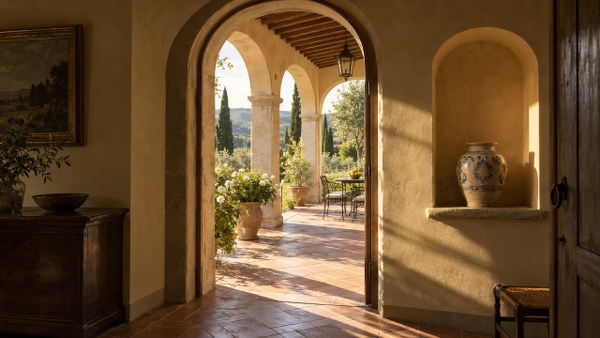
Arches are one of the strongest signatures of Italian architecture. You see them in loggias, doorways, windows and the passages that lead from one room to the next. They soften a space and give it a handmade, timeless look that a plain rectangle cannot match.

Arched doorway and loggia in an Italian villa

The idea: you do not need to knock down walls. Smaller details, such as an arched mirror, an arched niche or a rounded door frame, can bring the same softness.


How to do it


  • Create a plaster niche or an arched alcove for books, a vase or a statue.
  • Replace a square doorway between two rooms with a gentle arch, if your builder confirms it is structurally possible.
  • Choose arched mirrors, arched window shapes or an arched garden gate for a quick and affordable effect.
  • Add exposed or faux wooden beams to a ceiling, in a dark natural tone, to bring in the old farmhouse feeling.


4. Choose furniture that looks collected, not bought in one day

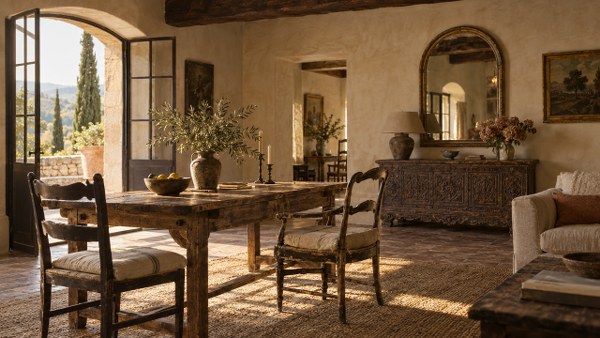
An Italian villa is furnished slowly. A heavy wooden table from a grandparent, a carved chest at the end of a bed, a painted chair from a local market, a pair of old armchairs with new fabric. The rooms look rich because the pieces have different ages and stories, yet they share the same warm tones and natural materials.

Antique wooden furniture in an Italian villa living room

The idea: avoid the matching furniture set. Mix a few good pieces with simple ones, and let some of them show their age.


How to do it


  • Buy one solid wood statement piece, such as a long dining table or a sideboard, and build the room around it.
  • Look in antique shops, flea markets and online second-hand sites for chests, mirrors, chairs and old frames.
  • Use natural fabrics such as linen, cotton and wool in cream, stone and muted green.
  • Keep the room uncluttered. A few large, meaningful pieces look more Italian than many small ones.


5. Pay attention to the exterior: shutters, doors and ironwork

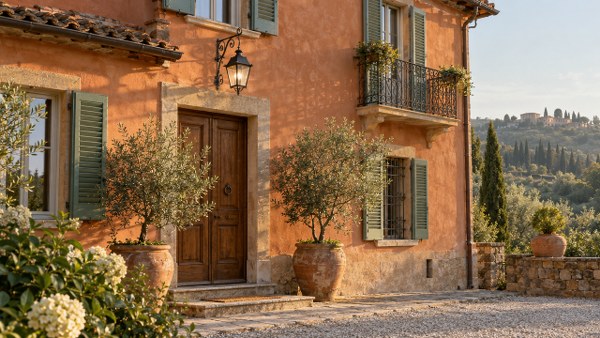
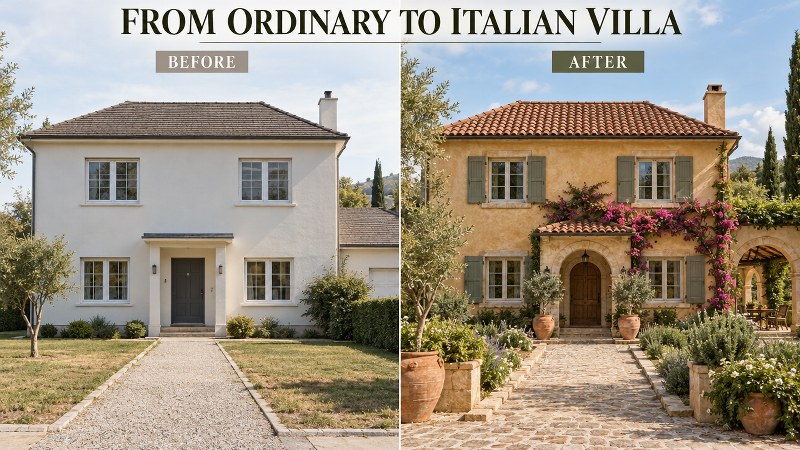
The first impression of a villa comes from the outside. Wooden shutters in soft green, grey or faded blue, a solid timber front door, small iron details and a roof in warm clay tones all create that unmistakable Italian look. The house does not need to be large. A simple facade with the right details can feel just as authentic.

Italian villa exterior with green wooden shutters and a wooden front door

The idea: think of the facade as a small number of calm, natural elements, rather than a lot of decoration.


How to do it


  • Add shutters to the front windows and paint them in a muted color, such as sage green, slate grey or dusty blue.
  • Choose a solid wood front door in a warm or dark tone, with simple iron handles and a lantern-style light.
  • Repaint or render the facade in a warm, earthy color, checking local rules or homeowner association guidelines first.
  • Use wrought iron for house numbers, balcony railings, gates and window grilles.


6. Create an Italian courtyard garden, however small

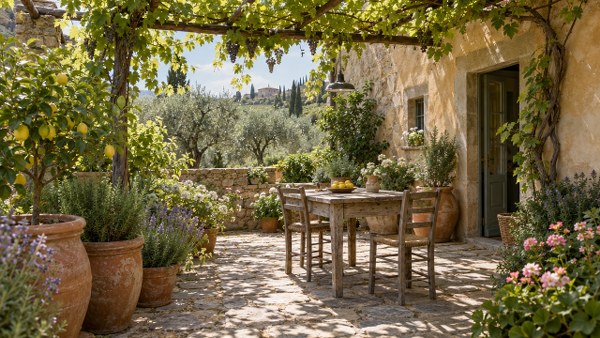
Italian villas are designed to live outdoors as much as indoors. There is almost always a shaded place to sit, a pergola or loggia, a wall covered in climbing plants and a few large pots full of green. The garden is simple and structured, with plenty of evergreens and herbs, and very little fuss.

Italian courtyard garden with terracotta pots, lemon tree and pergola

The idea: a balcony, a patio or a corner of the backyard is enough. Make it a place where you actually want to eat, read and have coffee.


How to do it


  • Use large terracotta pots and group them in odd numbers. In cooler climates, choose lemon trees or other plants that you can bring indoors in winter.
  • Plant rosemary, lavender, sage, olive trees (where they grow well) and cypress-shaped evergreens such as tall, narrow conifers.
  • Add a simple pergola, with a climbing plant such as a grapevine or wisteria, to create shade.
  • Finish with a weathered wooden table, a few chairs, gravel or stone underfoot, and warm outdoor lighting for evenings.


Final thoughts: an Italian villa is a feeling, not a floor plan

What makes an Italian villa so appealing is not luxury. It is calm, warmth and honesty: walls with texture, materials that age well, furniture with a story and a garden that invites you to sit down. These are things you can create anywhere, at any budget, one step at a time.

You do not have to do everything at once. Start with a wall color, a terracotta pot or a solid wooden table, and let the house change slowly, the way real Italian homes do. If you ever want to see the real thing, a trip to Tuscany will give you plenty more inspiration.

Which of these six ideas would you try first in your own home? Share your thoughts in the comments, and subscribe to the blog for more stories and ideas from Tuscany.


FAQ About Italian Villa Style

What defines an Italian villa style home?View Answer+

An Italian villa style home is defined by warm, earthy colors, textured plaster walls, natural materials such as terracotta, stone and wood, arches, exposed beams, simple wrought iron details and a close connection to a courtyard or garden. The look is rustic, calm and slightly aged rather than shiny and perfect.

What colors are best for an Italian villa look?view answer+

Choose warm, muted colors that look sun-faded: cream, sand, soft ochre, pale terracotta and dusty yellow for the walls, with warm white for the ceilings and trim. For shutters and accents, sage green, slate grey and dusty blue work well. A limewash or mineral paint gives the soft, cloudy finish that makes these colors feel authentic.

Can I get the Italian villa look on a small budget?view answer+

Yes. The most affordable changes are repainting a wall in a warm neutral, adding terracotta pots and plants, using natural fabrics such as linen, hanging an arched mirror and buying second-hand wooden furniture. These steps change the feel of a room without any building work. You can save the bigger projects, such as floors, arches and shutters, for later.

Can I create an Italian villa style in a modern house or apartment?view answer+

Yes. Even in a modern house or apartment you can use warm wall colors, a solid wooden table, natural stone or terracotta accents, linen textiles, wrought iron lighting and a balcony with large pots and herbs. If you cannot change the structure, focus on color, materials and furniture, and keep the rooms uncluttered so the look feels calm rather than themed.

What plants and trees give a garden an Italian feel?view answer+

Typical choices are olive trees, lemon trees in terracotta pots, cypress or tall evergreen shapes, rosemary, lavender, sage, bay laurel and climbing plants such as grapevines or wisteria. Which plants will thrive depends on your climate, so ask a local garden center. In colder regions, keep citrus and olives in pots and move them indoors for the winter.

What is the difference between an Italian villa and a Tuscan style home?view answer+

The two styles overlap a lot. Tuscan style is a rustic, farmhouse version of the Italian villa, with stone walls, exposed beams, terracotta floors and a quiet earthy palette. A grander Italian villa may add more formal elements, such as symmetrical facades, loggias, columns, decorative plasterwork and formal gardens. At home, you can mix both: the warmth and honest materials of Tuscany with a few more elegant details.


Welcome! We are glad you're here!
Like our website? Give us your like!


Travel to Tuscany, Italy - Tuscany Wine Tours & Cooking Classes


Popular articles
How to Make Your House Look Like an Italian Villa (Without Moving to Italy)
Italian villa style

In this guide you will find six practical steps to make your house look like an Italian villa...

Tuscany Christmas markets & Christmas villages - Florence Siena Lucca Montepulciano Arezzo Empoli Pisa
Christmas Markets 2026 - 2027

Planning a Christmas trip to Tuscany? Discover the best Christmas markets of 2026, town by town...

What do do with figs - Fresh figs recipes
What to do with figs

Fresh fig recipes are one of the best things about late summer and early autumn in Tuscany...

Top 10 Italian Makeup Brands - Affordable Must-Haves & Luxury Beauty Picks
Italian Makeup Brands

This guide will help you navigate the top 10 Italian makeup brands, compare affordable vs luxury...

Top 10 Tuscan Leather Brands - Where to Buy Genuine Leather Made in Italy
Tuscan Leather Brands

Tuscan leather brands are famous all over the world for their quality, craftsmanship, and timeless style...

Livorno Cruise Ship Port - Day Trips & Things to Do in LIvorno for a day
Livorno Cruise Ship Port

There're many things to do in and near Livorno for cruise travellers - day trips and shore excursions...

Best Slow Food Tuscany Restaurants 2026 - Italian Restaurant Awards Winners for Authentic Tuscan Food
Slow Food Restaurants 2026

Discover Italian restaurant awards winners for authentic Tuscan food - where to eat in Tuscany...

Top Italian Makeup Stores - Where to Buy Beauty Products in Italy
Buying Beauty Products in Italy

These top Italian makeup stores are where you can buy the best beauty products in Italy, from...

Top 10 Italian Skin Care Brands - Famous Italian Skincare Manufacturers
Top 10 Italian Skin Care Brands

In this guide, I'll share with you my favourite Italian skin care brands for women and men...

Where to Shop in Italy 2026 - Clothes Shopping in Italy - Designer and Outlet Shops
Where to Shop in Italy

Many tourists planning a shopping in Italy face the same question: Where to shop in Italy?

Best Pasta Brands from Italy and Best Italian Spaghetti brands
Best Italian Pasta Brands

These top Italian pasta brands dominate both Italian supermarkets and international shelves.

Olive Harvest Season in Tuscany, Italy 2025 - Fewer Olives - Will Price of Italian Olive Oil Go Up?
Olive Harvest in Tuscany

The olive harvest in Italy and the production of Italian olive oil mark one of the country’s...

How to Order and Drink Coffee in Italy
Italian Coffee

Ordering a coffee in Italy can be an adventure. Locals follow so called “commandments”: cappuccino is...

Top Luxury Ski Resorts in Italy - Where do celebrities go in Italy?
Luxury Ski Resorts

If you're planning your skiing holidays, our map of most exclusive ski resort in Italy visited by celebrities...

What does it cost to prepare a kid for school in Italy for public & private school
Cost of School in Italy

What does it cost to prepare a kid for school in Italy for public & private - primary, middle & high school...

What does it cost to prepare a kid for school in Italy for public & private school
Cash and Carry Italy

Metro Cash and Carry Italy is one of the largest wholesale store chains in Italy for business owners and...

Where to Find Wild Mushrooms in Italy - Mushroom Foraging Map
Mushroom hunting

Our mushroom map will help you mushroom foraging & truffle hunting in Italy...

Best beaches in Tuscany, Italy
Tuscany Beaches

Tuscany coastline offers breathtaking beaches with golden sands, crystal-clear waters, and stunning...

Zoo in Tuscany Italy - Zoo near Florence Italy
Tuscany Zoos

Tuscany is home to several zoos and wildlife parks. The Pistoia Zoo, one of Italy’s largest...

Water parks and Aqua Parks in Tuscany, Italy
Skiing in Tuscany

Abetone ski resort in Tuscany, Italy is known for its stunning alpine scenery and outdoor activities...

How to Make Garlic and Rosemary Infused Olive Oil Recipe
Garlic Infused Olive Oil

Infused olive oil with garlic and rosemary is a flavorful and aromatic addition to any kitchen...

Hot Springs & Thermal baths in Tuscany, Italy
Where to Fly into for Tuscany

What is the nearest airport to Tuscany? Tuscany has several airports serving international flights...

Must Try Tuscany Wine & Tuscany Wine Tours
Best Tuscan Wines

List of must-try Tuscan wines 2025 including taste profiles, and perfect food pairings...

Where to Shop in Italy - Shopping in Tuscany
Italian Clothing Brands

Italy is not just about high-end luxury brands; it also has many affordable Italian clothing brands...

How to Make Homemade Lasagna Step by Step - Italian Lasagna Bolognese
Making Lasagna like Italians

In this lasagna Italian recipe I will show you how to make lasagna step by step, how to layer it with...

What are ZTL zones in Italy? Driving in Italy
What is ZTL in Italy?

Tourists CANNOT drive into the ZTL zones in Italy (restricted traffic zones) unless...

What are ZTL zones in Italy? Driving in Italy
Italian Pharmacy Skincare

Italian pharmacy skincare must-haves are the hidden gems of European beauty...

Luxury watches brands ranking
Italian Luxury watches

This luxury watches of Italian brands list features iconic names from Italy...

Top 10 soft & hard Italian Cheeses to eat or bring back from Italy. Wine pairing and nutrition information
Must-Try Italian Cheeses

Top 10 soft & hard Italian Cheeses to eat or bring back from Italy. Wine pairing and nutrition information...

Blue Flag Beaches of Tuscany 2025 - Where to Swim in Tuscany in 2025
Tuscany Blue Flag Beaches

In 2025, 19 Tuscany towns awarded the prestigious Blue Flag beach award for clean water...

Chicken liver pate easy recipe - How to Make Tuscan crostini from scratch
Traditional Tuscan Crostini

Tuscan chicken liver pate, known in Italy as Crostini Toscani, is a delicious traditional Italian appetizer...

You might also be interested in: